

![Comparison between RK measurements. The measurements by the BaBar and Belle collaborations combine B+→K+ℓ+ℓ− and B0→KS0ℓ+ℓ− decays, where ℓ is a lepton. The previous LHCb measurements and the new result [4], which supersedes them, are also shown.](http://portal-cdn.scnat.ch/asset/40d25219-cf32-5d7f-a344-d4356ccc9252/Screenshot%202021-03-23%20at%2007.10.12.png?b=7f50075d-36d9-5913-bc44-fac8e7e34457&v=9bd7e834-a6a8-55b6-a09e-b7a43d64781f_100&s=ZXCr4RK3qEJY7uCaZs-9pRZZZ8OZ8EVj3Rtyhyf2-qP-evQun65d57tCLxGqXtaTEoil2Qpqb3qILXWzeagdRAk0VyPfdvD6i55sqpj1txNkByqDDgqtsu4QPc8YaVnoTVyp_QF8cXZ9TucqIpINFjwWWfLF-52KvErWu9a54Gs&t=2f78dd92-7a22-4f43-a0bf-8326ef689cea&sc=2 "Comparison between RK measurements. The measurements by the BaBar and Belle collaborations combine B+→K+ℓ+ℓ− and B0→KS0ℓ+ℓ− decays, where ℓ is a lepton. The previous LHCb measurements and the new result [4], which supersedes them, are also shown.")
- Press release
- News
Neutrino o’clock
Image: Federico Sanchez, U. Geneva1/19- Press release
- News
Neutrino experiment comes back to life
Image: J-PARC/Rey.Hori2/19Strategic Workshops & Documents
3/19- Press release
- News
Lesya Shchutska is the Prize winner of the Prize Latsis in 2023
Image: SNSF, Mathilda Olmi4/19- Press release
- News
CHIPP Prize 2023: On a course to discovery
Image: Anne-Mazarine Lyon5/19- Press release
- News
New flavour for Basel
Image: Admir Greljo6/19- Press release
- News
Order through kaons
Image: Radoslav Marchevski7/19- Press release
- News
First sighting of neutrinos from a collider collision
Image: Anna Sfyrla8/19- Press release
- News
“Strange animals” in the spotlight
Image: U. Bern9/19Women In Science
Image: CHIPP10/19PhD School
Image: CHIPP11/19- Press release
- News
Hopp Higgs!
Image: FERMILAB12/19Higgs@10
13/19- Press release
- News
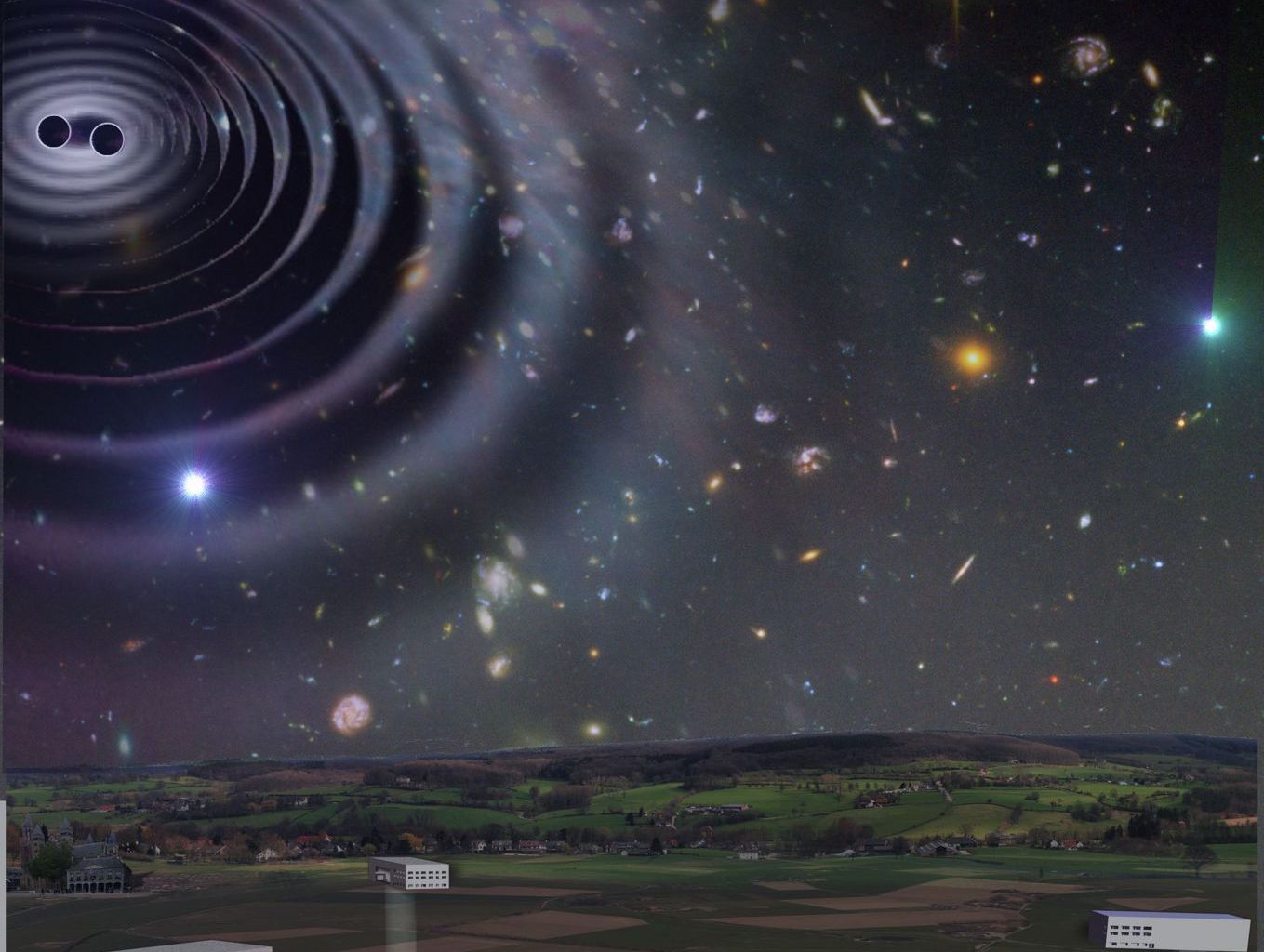
Making (gravitational) waves in Switzerland
Image: Bild: R. Williams (STScI), Hubble Deep Field Team und NASA14/19- Press release
- News
Gabriel Cuomo receives the CHIPP Prize 2021
Image: G. Cuomo15/19- Press release
- News
Recent Results from LHCb Challenge Leading Theory in Physics
Image: LHCb, CERN16/19- 2021
- Report
CHIPP Roadmap
Image: SCNAT17/19- Press release
- News
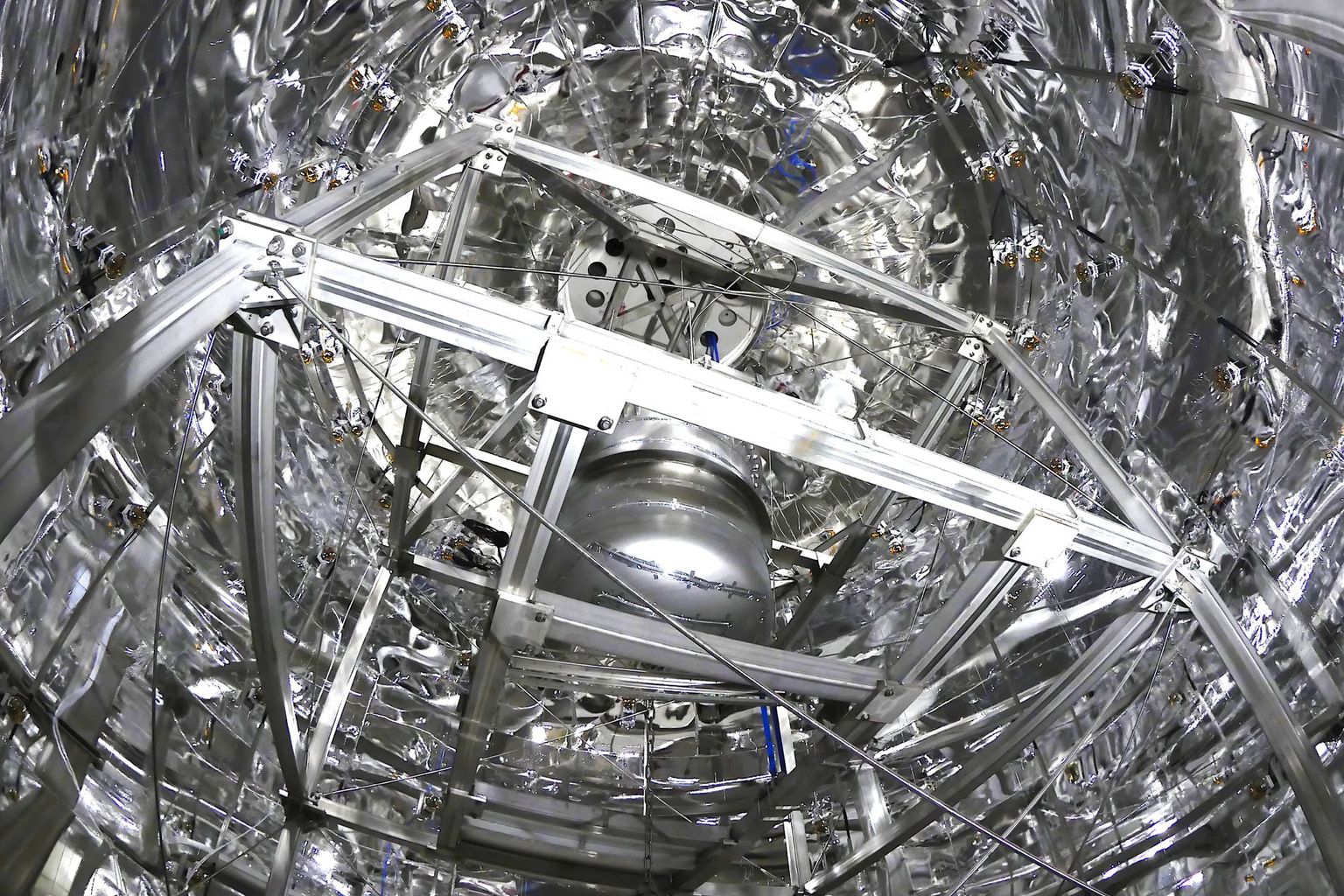
Two dark matter detector heavyweights join forces to build new observatory
Image: XENON experiment18/19- Press release
- News
Leading Xenon Researchers unite to build next-generation Dark Matter Detector
Image: XENON collaboration19/19
The Swiss Institute of Particle Physics (CHIPP) is the bottom-up organisation of Swiss particle and astroparticle physics researchers in Switzerland as a legal entity of Swiss law. CHIPP is tasked with coordinating the national efforts in the realm of particle and astroparticle physics.
This is achieved by keeping a continuous dialogue between the particle physicists of different cantonal universities and federal institutes. CHIPP is recognized as the representative of Swiss particle physics both nationally and internationally. It awards yearly a Prize to a PhD student, supports workshops and conferences, organises PhD schools, and develops outreach projects.
Events, News, Publications
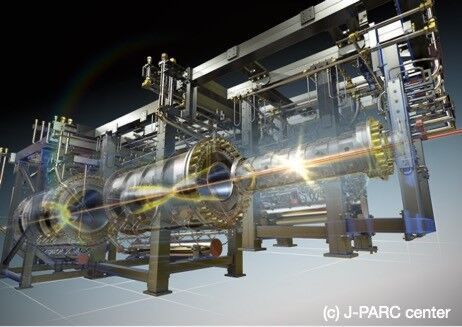
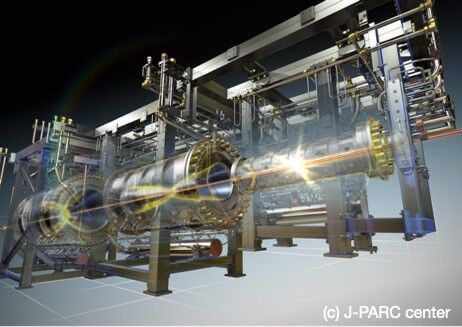
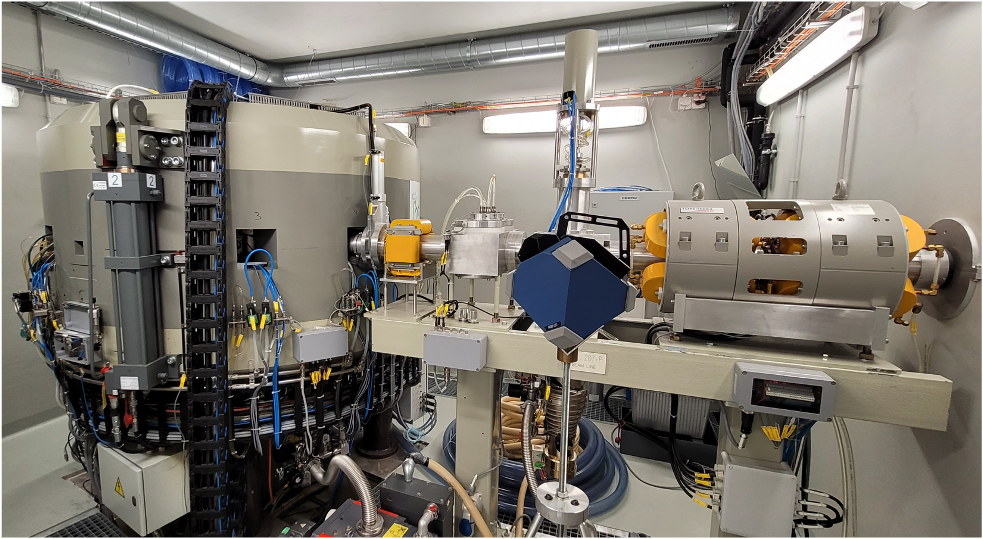
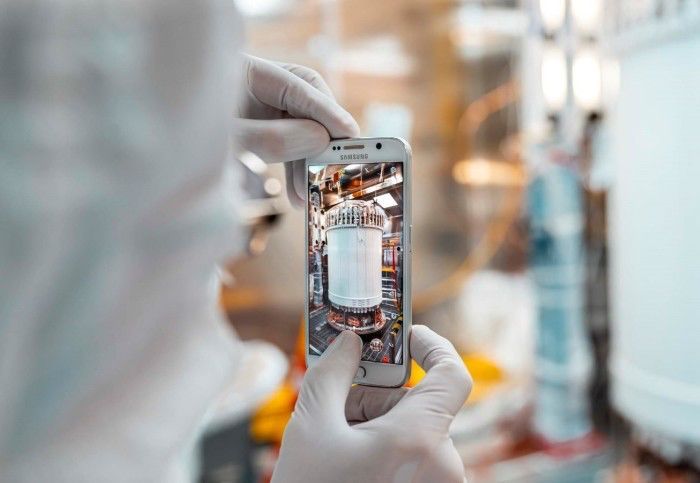
Neutrino experiment comes back to life
Good news from the “T2K” neutrino experiment project in Japan: it has started taking data again at the end of last year after an extensive upgrade of its neutrino beam and the near detector. The near detector is very firmly in the hands of Swiss institutes – University of Geneva and ETH Zurich. Federico Sánchez from the University of Geneva gives an update of what has happened and what we can expect.
Image: J-PARC/Rey.Hori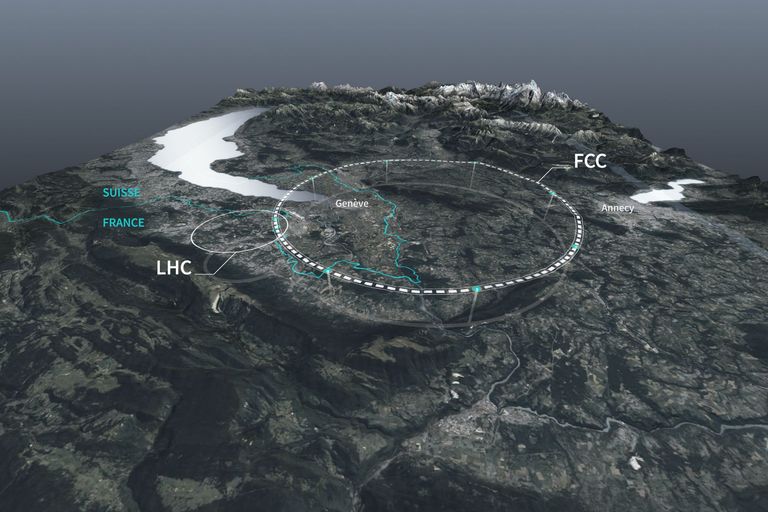
The planners of the future are ready to go
The international particle physics hub CERN in Geneva has big plans for the future. Literally. While its current flagship, the Large Hadron Collider (LHC), is scheduled to continue data taking until the 2040s, the international community of particle physics is already busy conceiving potential follow-up projects to complement the discoveries made at the LHC.
Image: FCC/CERN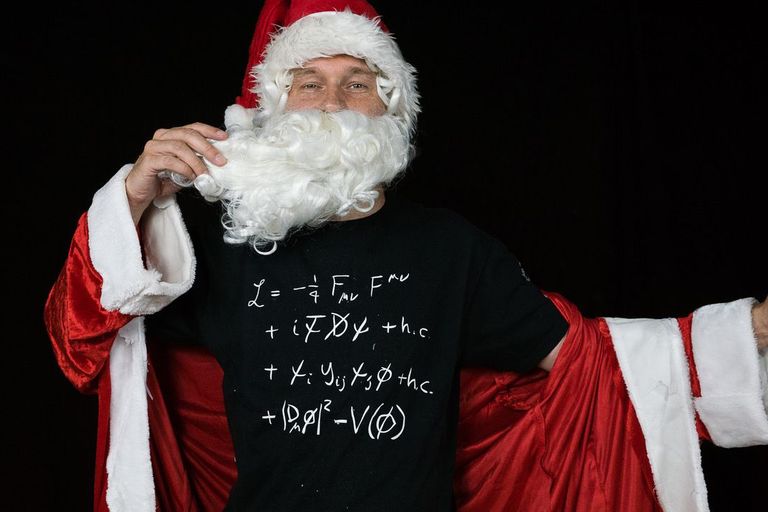
‘Tis the season to do experiments
Please add to the shopping list: a few pieces of chalk, a cobblestone, twelve cotton buds, 50 grams of pepper powder, a tube of effervescent tablets, adhesive tape...
Image: Physics in Advent
Science Gateway: opening the door to CERN and its research
New visitor centre is accessible, carbon neutral and packed with science
Image: CERN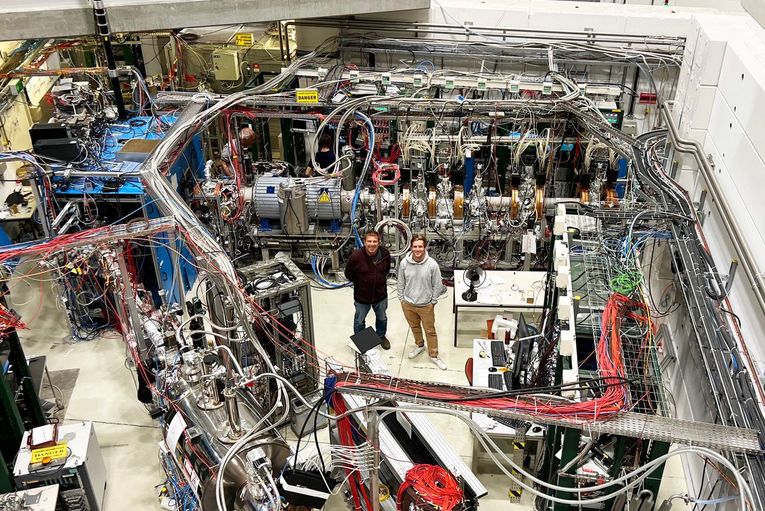
Antihydrogen: check! GBAR completes key step in antimatter research
Positrons: in their cloud. Antiprotons: generated. Deceleration: achieved. Mixing: check! The antimatter experiment GBAR has just published a paper in which it reports on their first detected antihydrogen atoms. This is a key step towards the ultimate goal of antimatter research: finding a reason for the asymmetry between matter and antimatter.
Image: Sarah Geffroy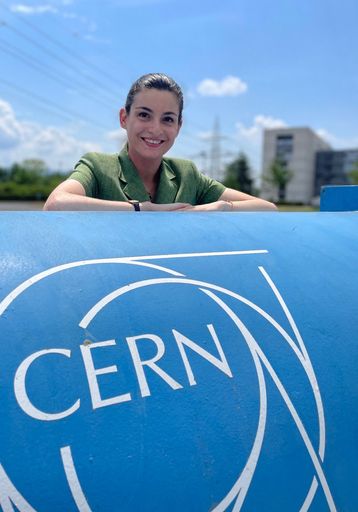
CHIPP Prize 2023: On a course to discovery
This year’s CHIPP prizewinner Anne-Mazarine Lyon hunts for signs of new physics in the form of supersymmetric particles and heavy neutrinos.
Image: Anne-Mazarine LyonContact
Swiss Institute of Particle Physics (CHIPP)
c/o Prof. Dr. Ben Kilminster
UZH
Department of Physics
36-J-50
Winterthurerstrasse 190
8057 Zürich
Switzerland
CHIPP Outreach Portal
Particle physics news
Partners | ||||||
|---|---|---|---|---|---|---|
 |  | |||||